


Shimrit Dror
Learning strategies and skills for children, teens, students and adults
Learning strategies and skills for children, teens, students and adults
Research into attention difficulties in children and adults is still in its early days, and as with the rest of the brain, far more is hidden than known.
At the same time, new studies keep revealing more information that helps us understand the brain, ADHD and its accompanying symptoms, and with it comes the hope of finding more effective, healthier solutions.
Just as important, new findings help parents face the well-known, difficult dilemma of whether to give their child Ritalin or similar medications.
A holistic approach looks at the whole person, with all of their physical and emotional parts.
This view allows a deeper understanding of our emotional life in many areas, as well as a deeper understanding of physical processes.
So it’s no surprise that a growing number of studies examine how the brain is affected by other areas of the body. They add a great deal of knowledge that should be available to every parent of a child with attention difficulties, and to adults who struggle with attention.
This view examines a wide range of factors that may cause or accelerate the condition. Studying these factors in depth may be a key to easing the symptoms.
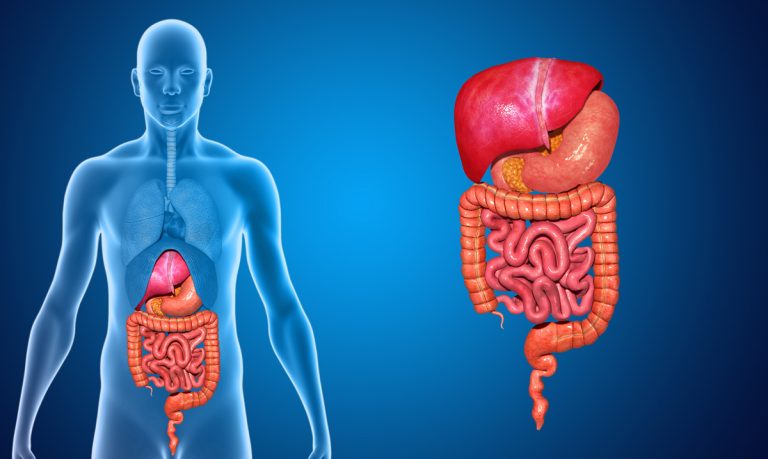
The link between the “second brain” in the gut, and the digestive system as a whole, and the brain itself is also being studied as a possible factor in attention difficulties.
Here are some findings from a study published in November 2013:
The study included 742,939 children aged 4–12, of whom 32,773 (4.4% of all participants) had previously been diagnosed with ADHD.
These findings were the same for children who took Ritalin or another ADHD medication and for children who were diagnosed but did not take medication.
This makes it unlikely that the medication itself causes the unhealthy bowel function. The fact that the findings hold for children who don’t take medication calls for deeper research: are bowel problems a primary cause, or an accelerator, of ADHD? Or does ADHD, stemming from some third factor, cause bowel problems as a side effect?
Important neurotransmitters such as dopamine and serotonin are also produced in the gut.
Dopamine is a neurotransmitter that helps pass messages between nerve cells in the brain and is responsible for the healthy functioning of the reward system, the brain system responsible for feelings of pleasure, drive and motivation.
Dopamine seems to work differently in people with attention difficulties than in people without them, but the exact cause is unknown: is it the amount, the quality of the neurotransmitter, the way it’s transmitted, or another factor?
In other words, the assumption that a lack of dopamine causes ADHD is not necessarily correct, and scientists can’t yet say for certain what the source of ADHD is.
Our digestive system, which starts at the esophagus and extends all the way to the anus, contains about 500 million neurons that function as a brain-like system, passing nerve signals between cells with the help of neurotransmitters such as dopamine. These neurons are found in the muscles and are responsible for gut movement, such as the smooth muscle movement along the intestinal walls and the signals that coordinate the contractions along the system at the different stages of digestion.
This number of neurons, together with more than 30 different types of neurotransmitters found in the gut, most of them similar to those in the brain, carry the messages for action and make the digestive system work as an integrated whole.
Here is a quote from an article published in New Scientist magazine in 2012, describing the role of dopamine in the brain and in the gut, and the question of whether substances pass between the two “brains”, the first in the skull and the second in the gut:
“In the brain, dopamine is a signalling molecule associated with pleasure and the reward system. It acts as a signalling molecule in the gut too, transmitting messages between neurons that coordinate the contraction of muscles in the colon.”
“The general consensus is that neurotransmitters produced in the gut cannot get into the brain – although, theoretically, they could enter small regions that lack a blood-brain barrier, including the hypothalamus.”
Muscle contraction is how the intestines efficiently move food along the long digestive tract.
Is there a link between dopamine production in the gut and attention difficulties?
Are these also linked to the finding mentioned at the beginning of this article about the connection between bowel problems such as constipation and attention difficulties? (As a reminder, children diagnosed with ADHD had about three times the rate of constipation and complaints of digestive pain.)
Could the fact that the digestive system, a heavy, massive, complex and vital system in the body, constantly needs a considerable amount of good-quality dopamine to function well point to a kind of “competition” between the brain and the gut for this vital resource?
And despite the brain producing its own dopamine, does some dopamine reach the brain from the gut, and vice versa, does dopamine from the brain reach the gut?
And of course, are any of these involved in creating attention difficulties?
Dear readers 💜
I invite you to receive, as a free gift from me 💜
the first lessons of my "Learning How to Learn" course